Esthetician Forms: What to Collect Before, During, and After a Visit
Esthetician forms have different jobs at booking, first visit, treatment, aftercare, and follow-up. Use this checklist to sort each page into the right moment.
By Esthetician Business Kit by Cosmo Suite · Editorial policy
Published · Updated · 9 min read
Esthetician forms are the pages and records you use to prepare for a client visit, document the service, and give follow-up instructions. A simple sequence is shared intake before the first visit, consent for the planned service, a note after the appointment, and relevant aftercare. The forms that apply depend on your services and local rules.
These are templates and general information, not legal advice. Check your state board and local rules.
If forms live in one long document, it is easy to ask the same questions twice or miss a service-specific detail. Give each page one job and one moment in the client visit. That makes paperwork easier to complete between bookings and easier to review before treatment.
Esthetician forms at a glance
Use a shared intake form for background details, then add the pages that fit the service and visit. Consent, treatment notes, photo permission, aftercare, and cleaning records have different purposes.
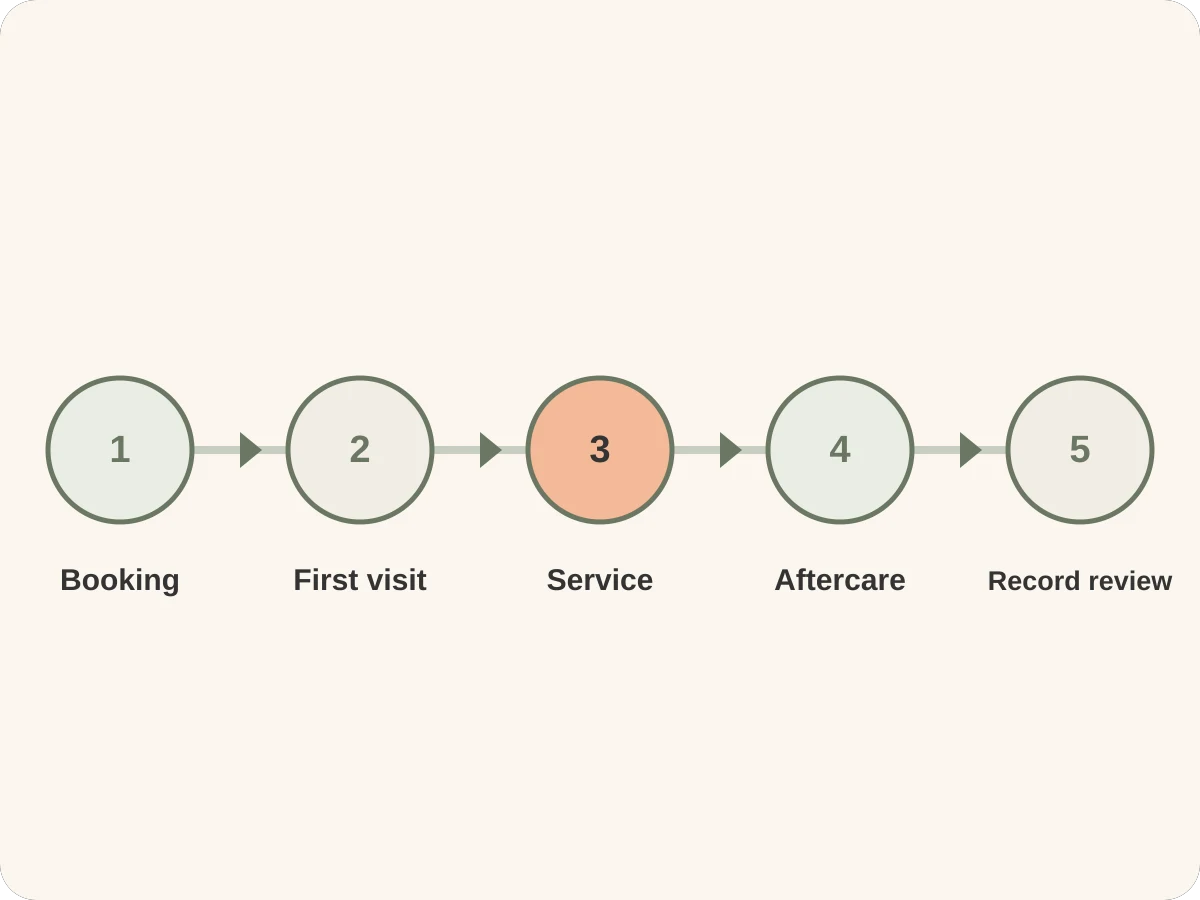
| Client moment | Form or record | What it helps you capture | When to review it |
|---|---|---|---|
| Booking | Booking and cancellation policy | Appointment expectations, deposit terms if used, how to reschedule | When your booking terms change |
| Before the first visit | Client intake and consultation | Contact details, goals, relevant sensitivities, current products | At intake and when details change |
| Before a service | Service-specific consent | The service discussed, relevant risks and questions, the client's decision | Before the service and when the service changes |
| During or after a service | Treatment plan or visit note | Service performed, relevant products or settings, client response, next step | After each visit |
| Before the client leaves | Service-specific aftercare | Instructions the client can refer to after the appointment | After each service where guidance applies |
| Between clients | Cleaning inspection log | The studio's cleaning and inspection tasks | At the points required by your procedures and local rules |
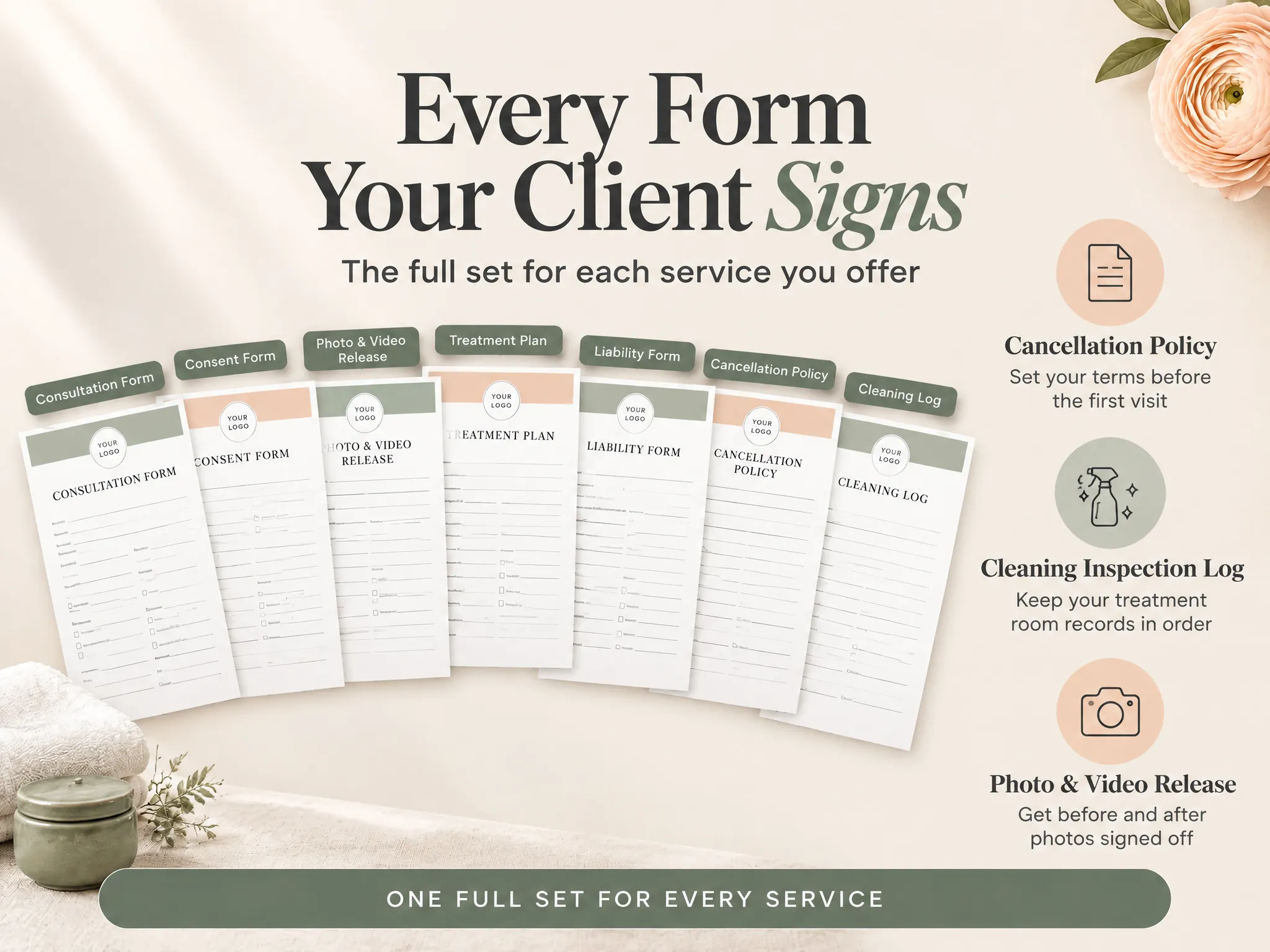
A photo or video release belongs in the system only when you plan to take or use client images. It records permission for that use, separately from permission to perform a service. Check your state's requirements before deciding how to word or store any form.
For example, imagine a new client books a lash extension appointment. The booking page points to the cancellation terms; the client completes shared intake before the first visit; you review lash-specific consent before the service; and you give the matching aftercare card before the client leaves. After the visit, you complete the note and keep it with the client record. The cleaning log stays separate and follows your studio's between-client procedure.
Before the first appointment, collect shared intake information
A client intake form gives you the background to prepare for a first appointment. Keep it focused on details that help you understand the client's goals and decide what you need to discuss before a service.
Common sections include the client's name and contact details, skin goals or concerns, current products, sensitivities or allergies they choose to report, and an area for questions. For services near the eyes or involving a cosmetic product, ask the client to identify relevant past reactions and products in a way that fits your service and training. The FDA advises people to read cosmetic product labels, follow directions, and heed warnings. An intake form can capture which products a client uses. It cannot replace label instructions or a professional assessment.
Avoid collecting information simply because a template has a blank field. Explain why you ask for a detail, who can see the completed form, and how the client can update it. If you do not need a field to plan or document the service, remove it from your version.
Intake and consent answer different questions. Intake asks what you need to know before planning the appointment. Consent records which service you discussed and whether the client chooses to proceed. You can put both on one page if each section stays clear and the client can review them separately.
Before the first booking, also make your appointment policies easy to find. State how clients can cancel or reschedule, any notice period or deposit terms you use, and where they can ask questions. Do not copy a generic policy without checking that it fits your state, booking method, and business practice. A ready-to-edit set of esthetician client forms can help you organize intake and service paperwork in one place.
Before each service, use consent that names the treatment
A service-specific consent page should identify the treatment the client and esthetician discussed. A broad “beauty services” form can be hard to use if the client cannot tell which service, products, or questions it covers.
Before each service, explain the treatment, product or technique, and questions the client should answer. Tell them what you will do if a concern changes the plan. Use plain words. Keep medical decisions with qualified health professionals, and do not tell a client that a form proves a treatment is safe for them.
A useful review sequence is:
- Confirm the service and the area being treated.
- Ask the client to review the information and raise questions.
- Confirm any follow-up discussion or change to the planned service.
- Record the client's choice and the date in the way your local rules require.
- Pause and check your scope or board guidance if the service raises a question you cannot resolve.
A consent signature does not replace a conversation. It also does not authorize a service outside your training, license, or state scope. The approved plan for this site specifically warns that scope differs by state for microneedling, chemical peels, and laser services. Check your board's current rules before offering those services or using a form for them.
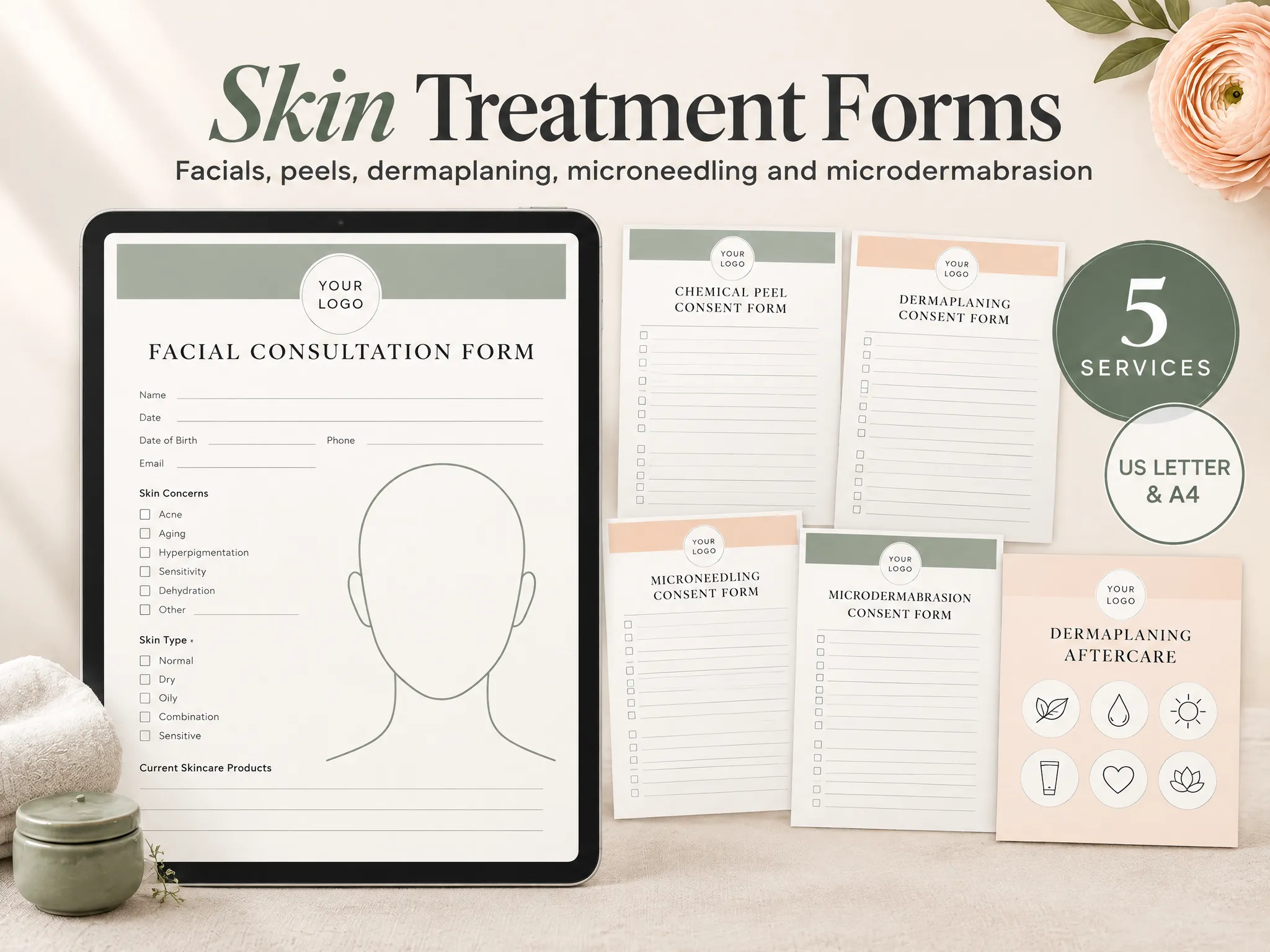
Keep the service name visible if a client books multiple treatments. A lash appointment and a chemical peel do not call for the same service-specific discussion. The kit's contents list groups forms by service, including lash and brow, skin treatments, waxing, body sculpting, spray tan, laser hair removal, and nail services. Use only the forms relevant to the service you actually offer.
During and after a visit, record what happened
A treatment plan or visit note helps you remember the service completed and the next step discussed. Write it after each appointment while the details are fresh, using short factual notes rather than conclusions about the client's health.
A practical record can include the appointment date, service, products or settings when relevant, the area treated, a client-reported concern or response, and any follow-up you discussed. If the client reports an unexpected reaction, record what they told you and what you did next according to your procedure. Do not diagnose the cause in the note.
The FDA accepts reports of cosmetic product reactions, including a rash, redness, burn, or other unexpected effect. Its guidance says to stop using the product and contact a healthcare provider. If a client reports a reaction, follow your training and local procedures, avoid giving medical advice, and direct them to an appropriate health professional. Your record should capture the conversation accurately; it is not an FDA report or a medical record.
Keep your cleaning inspection log separate from client consent and treatment notes. A client signature does not document that a tool or work area was cleaned. OSHA's nail salon guidance describes handwashing and cleaning practices for that setting and points salons to state cosmetology board policies. Check the rules and procedures that apply to your own services and location.
After each visit, update only the information that changed. If the client has a new goal, product, or concern, note it in the appropriate section. If no details changed, do not make the client repeat a full intake form just to create another dated page. Follow your board's requirements for what records to keep and how long to retain them.
Before the client leaves, give service-specific aftercare
Aftercare is easiest to use when a client can find the instructions for the service they just received. Give the relevant card or written directions before the client leaves, and explain any product-specific directions that apply.
Keep the wording short enough to scan. Separate the steps the client should follow from the signs that mean they should contact you or seek professional care. Avoid adding treatment claims or fixed timelines unless your approved service guidance supports them. Product instructions can differ, so refer to the relevant label and your own training.
Use an aftercare card only for a service where you have a matching, approved set of instructions. Esthetician Business Kit lists aftercare cards for lash extensions, tint, microblading, permanent makeup, dermaplaning, waxing, and body sculpting. It does not list cards for every skin treatment. Do not imply that a general card covers a chemical peel, facial, or lash lift when it is not in the kit's contents.
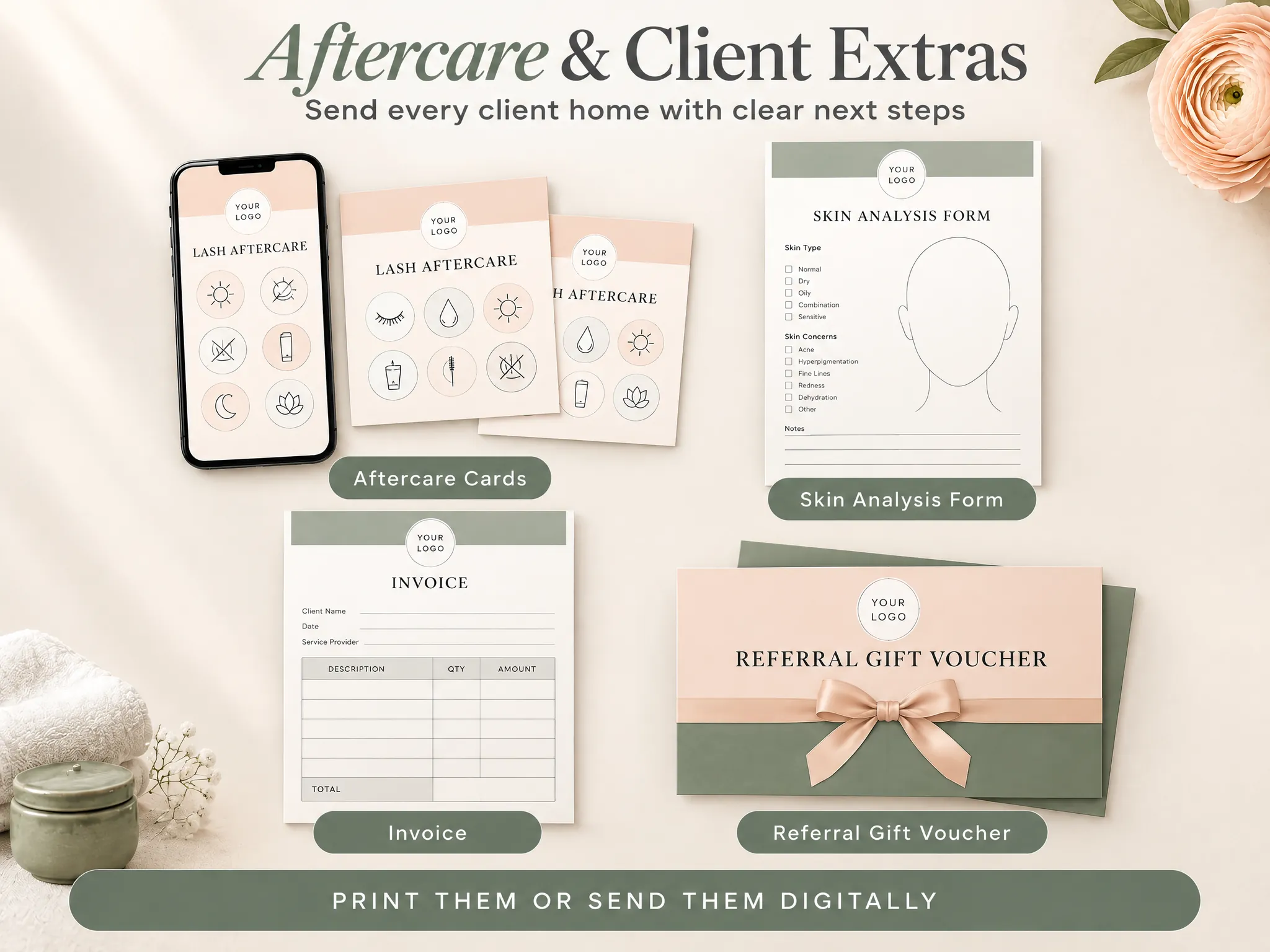
If you update the card, date the revision and check the wording against the product directions and any rules that apply to your service. Keep the instructions consistent with what you say during the appointment so the client is not left comparing two different sets of directions.
Keep the paperwork usable and private
A form system works when you can find the right page before the appointment and the completed record afterward. Choose paper, digital forms, or a mix based on how your clients book and how you manage records.
For a paper workflow, use a labeled folder or filing system that separates blank forms from completed client records. For a digital workflow, use an account with access controls and avoid sharing client files through public links. In either case, check your state and local retention and privacy rules. Do not assume that one app, password, or template settles every privacy obligation.
Review your packet when you add a service, change products, update your booking terms, or learn about a rule change. Remove old copies from the booking link and studio so clients and staff do not keep using two versions. If a client asks to correct a detail, follow the process that applies to your record system and location.
A short pre-appointment check can keep the paperwork in order:
- Is this the right intake version for the client?
- Is the service-specific consent current and available?
- Does the client need a photo or video release for a planned image?
- Is the visit note ready to complete afterward?
- Does the client need a matching aftercare card?
Use the check before each appointment to catch a blank page, an outdated link, or a missing service-specific version.
Why trust this article
This guide is from Esthetician Business Kit by Cosmo Suite. It uses the product's approved contents list and links to FDA and OSHA guidance for the limited safety points discussed above. Read the site's editorial policy to learn how its articles are reviewed. The sources were checked on October 19, 2026. Templates are general information, not legal or medical advice. Check your state board and local rules before you use a form.
Where Esthetician Business Kit fits
Esthetician Business Kit is a Canva set of client forms for 14 services. The product includes forms for 14 services. Each set lists consultation, consent, photo and video release, treatment plan, consent and liability, cancellation policy, and a cleaning inspection log. Seven service categories also have matching aftercare cards, alongside a skin analysis form, invoice, referral gift voucher, and guide with Canva links.
The files are offered in US Letter and A4, for print or digital use, with a free Canva account. You can review the Esthetician Business Kit form set if you want a service-by-service starting point. Its forms are templates, not legal advice, and the product does not replace checking board requirements or adapting a form to your practice.
If you are organizing forms for upcoming visits, the Canva forms for estheticians include a guide with links to the pages. Review the contents, then adapt the forms for the services you offer. You can also browse the esthetician form collection before choosing a starting point.
Frequently asked questions
What forms does an esthetician need for a new client?
Start with a client intake form, then use service-specific consent before the treatment. Add a treatment plan or visit note, a photo release only if you want to take or use images, and clear booking and cancellation terms. Check your state board and local rules for the forms and records that apply to your services.
What is the difference between an esthetician intake form and a consent form?
An intake form gathers background information and goals. A consent form explains the specific service and records the client's decision to proceed. They answer different questions, so keep them separate or make their sections easy to distinguish.
Should a client sign a new consent form for every appointment?
Use the consent process required by your state and your service policies. Revisit it when the service changes, the form's information is out of date, or your rules call for a new signature. A signed form does not replace a conversation or professional judgment.
Can I use digital esthetician forms?
Digital forms can fit a booking and intake workflow that already happens online. Check your local rules, make sure the client can read and complete each page, and store the finished record with appropriate access limits. Keep a print option if it suits your workflow.
What should I write in a client treatment record?
Record the service, date, products or settings used when relevant, the client's stated response, and the next step you discussed. Keep notes factual and brief. Follow your state board's rules for what to record and how long to retain it.
Are esthetician forms templates legal advice?
No. A template is a starting point for organizing information. It does not confirm that a form meets your state's laws or covers a specific service. Check your board's requirements and ask a qualified attorney when you need legal advice.
